Featured

Can Digital Systems Improve the Mental Health Process?

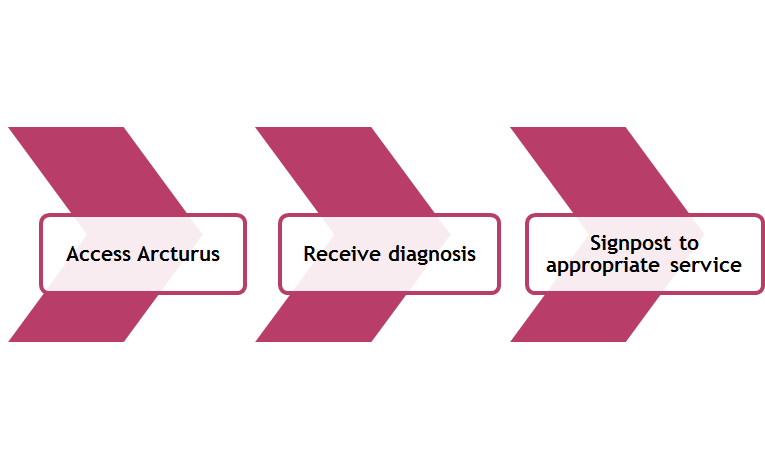
Arcturus is a digital, mental health diagnostic tool that can be completed by any person who has access to the internet, at any time.  The assessment takes approximately 10 to 15 minutes to complete and is efficient in diagnosing all recognised mental health conditions listed in the Diagnostic and Statistical Manual of Mental Health Disorders 5 (DSM-5) and International Classification of Diseases 10 (ICD-10).  It is currently the only existing on-line diagnostic tool, programmed using criteria from the DSM-5 and ICD-10. 

Addressing The Problem – Waiting Times

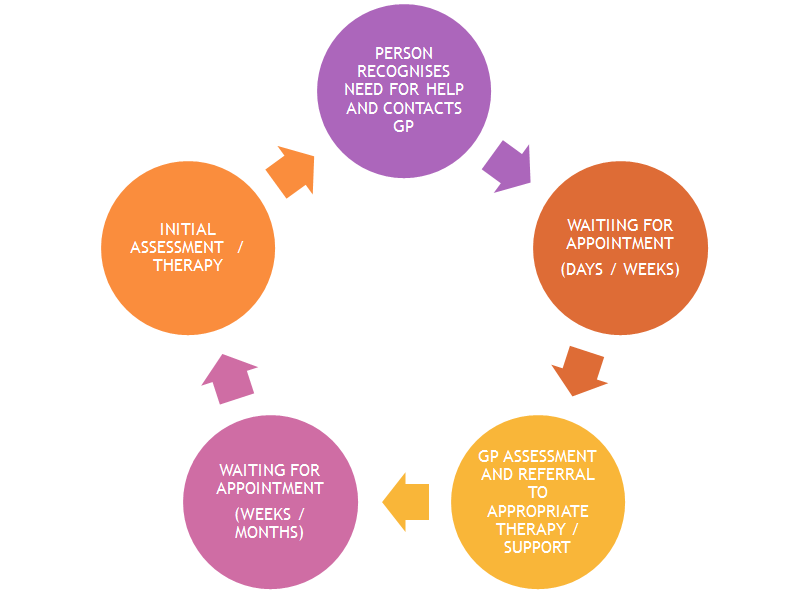
There is no doubt that the current NHS waiting times for diagnosis are a huge problem. According to The Independent Mental Health Taskforce, early intervention for people experiencing a mental health problem is a crucial aspect in the prevention of symptoms escalating and achieving positive recovery outcomes.  However, despite the benefits, a number of avoidable factors contribute to a failure to seek help at all. 

A well-known and extensively researched barrier to help-seeking is the fear of stigmatisation, leading to many celebrity-led campaigns, aimed partly at raising awareness of their commonness.  In fact, mental health issues affect 1 in 4 adults annually; however three quarters of those experiencing problems do not receive any form of support. 

Can Digital Systems Provide a Solution?

I believe they can! A mental health condition is diagnosed based on a number of factors including effects on behaviour, mood, history and impact of symptoms on everyday life. This information is gained by asking a number questions taken from questionnaires, which have been designed to elicit enough information to provide an accurate diagnosis. So why can’t the same information be processed digitally? The answer is simply “It can!”

How does this Help Improve the Current System?

My reasoning is mainly based on NHS resources. We are all well aware of cuts to NHS services and the consequential negative effects on those requiring help. People describe the anguish of waiting months for an assessment, often expressing feelings of anger and frustration. Whilst some people may want to connect with another human being, many people just want answers. As previously discussed, some people feel too afraid to seek help at all.

An online mental health assessment can provide people with instant access to gaining a diagnosis. People often just want to understand why they feel the way they do and know that they can be helped. For those who do not wish to see a GP, a digital system also provides privacy.

The Googling Issue – we are already going online

The National Institute for Health and Care Excellence claim that 97% of people experiencing mental health issues do not know who to contact.  This provides one explanation of the trend in Googling symptoms. The problem with Google however, is it just doesn’t get to the point. Ads, quacks and novel sized information pages are just a few of the issues that can overwhelm a person looking for help. This is why we should be asking “why isn’t there a legitimate and validated online tool out there to provide people with answers?”

We are Almost There.

At Denver Arc, we have the technology. We have already launched our signposting app ‘Solis’ and our digital diagnostic tool ‘Arcturus’ is ready for clinical testing. Your thoughts, concerns and general input however are an important aspect of this process. Share your experiences with us and tell us what you think.

Written by Julie Manifold, Assistant Psychologist in Public Consultation.

The Impact of Other People’s Words and Actions on Our Mental Wellbeing

‘Sticks and stones may break my bones, but names will never hurt me’. A phrase we were often told as children? Something we try and tell ourselves is true? In an ideal world – yes. But in reality, other people’s opinions of us and the things they say or do can be hurtful and have a huge impact on the way we feel, the way we see ourselves and the way we live our lives.

Life really can be a rollercoaster – a series of ups, downs, and every emotion from jubilation to fear. The problem is – sometimes the downs seem to last longer and hit harder. Difficulty in just one aspect of life can have a huge impact on every other aspect of, not just your life, but those of the people around you.

lisablog1

Previously I wrote about work related stress. This is something I experienced myself. I was working 65 plus hours per week in supposedly a part time role, giving my heart and soul to my work. Yet I was constantly told that I was not doing enough, wasn’t meeting targets and could be doing better. I was spoken to in a tone that made me feel inferior and was subjected to tuts and eye rolls on a regular basis. It hit me hard. Being a teacher was not just a job, it was a part of who I was as a person. I had enjoyed a successful career of 15 years, I had progressed to a senior position in the school where I worked and had had a positive impact on many young lives. That all changed rapidly when new management stepped in and slowly and painfully ripped every ounce of confidence I ever had away from me.

When people behave negatively towards you and criticise you enough times, you slowly begin to believe what they are saying is true. Are people entitled to their opinions? Absolutely. Should we be open to constructive criticism and seek to always improve and develop? Most definitely. But should we have to listen to people, who are supposed to be professionals, speak down to us like a piece of dirt on their shoe? Be negative towards us, without opportunity to respond with a differing point of view? Make personal comments to our faces and behind our backs? Belittle us in front of colleagues, other professionals, children and parents? No, never! Unfortunately though, this is a reality. Some people think they have the right to say whatever they like, whenever they like and to whoever they like, with a total disregard for how it makes that person feel. In my case, this was what I had to put up with from my superiors at work. But it is by no means unique to me, or a workplace situation. It could be:

– Parents

– A partner/spouse

– Friends

– Work colleagues/ fellow students

– Family

– People we meet out and about/ speak to online

Or any number of other situations. Essentially, it can be anyone we interact with. It could be one, throwaway comment or an ongoing cycle of behaviour.

Over time, those negative feelings, attitudes and/or words are imbedded and it is quite likely as a result to become self-critical of everything. It’s then a vicious cycle – if you don’t believe in yourself, who else is going to believe in you. If you don’t think you can do something well, you won’t. If you behave negatively, you will more likely receive more negativity. It’s a downward spiral that spills out from one situation and begins affecting other aspects of day to day life.

lisablog2

So how does this negative behaviour affect us?

For me, I started shutting myself off from the world. I felt like a burden – useless and worthless. I carried on with day to day living but I often felt like a zombie, going through the motions. I hated myself and couldn’t see why anyone wanted to be around me. I felt that if people were kind to me or tried to spend time with me it was because they felt like they should, not because they actually wanted to. When things were really bad, I would lie in bed wondering how I could make myself ill so I didn’t have to leave the house, and I considered crashing my car on the way to work so I didn’t have to go in. My GP suggested I access counselling to try and understand how I was feeling and try to rebuild my confidence. But I was warned that there was a long waiting list to access NHS counselling sessions. I didn’t see myself as a priority, I thought there were many people more in need than me, so I didn’t even put my name down. I wish I had done. Or, I wish I had known then what I know now – that there are many options out there that don’t require going via the NHS and your GP.

Thankfully, I am one of the lucky ones. I have an amazing husband, who stood by me every step of the way. I have two wonderful children that gave me a reason to keep going every day. And I have a supportive family and circle of close friends who stuck by me and have helped me come out of the other side. I don’t really know what was ‘wrong’ with me. Was I depressed? Was I suffering from anxiety? Was I stressed? I don’t really know. I just know I was in a very deep hole and for quite a while, I had no idea how to get out.

So how did I get out? What steps can be taken to get out of a situation like this?

– Try to remove yourself from the negativity (For me this meant leaving my job)

– Talk to someone about how you feel (Family, friends, a professional)

– Accept support from the people who care about you (If they are still there it is because they want to be)

– Acknowledge the positive aspects of your life (There will be some, find them)

– Try not to compare yourself or your situation to others (You are the only you – the one that matters)

– Try to look to the future, set yourself some goals (However tiny they may be at first)

When I reflect on this difficult time in my life… I hate that my children saw me break down in tears on numerous occasions. I’m sad that I feel like I lost over a year of my life to this. I am angry that my career was ripped from me, by those people who should have been supporting and guiding me. I feel guilty that so many people were affected by me being down, angry, upset, unsociable and generally negative. But I am trying to move forward positively and see the good that has come from it too. I am thankful that I am surrounded by people that care about me and that want to be around me. I am optimistic that if I can get through the last 12 months relatively unscathed then I can get through pretty much anything. I am excited that I have a new job, working with some really great people, on a project that could make a huge difference to a vast amount of people. I am eager to promote mental health awareness, encourage people to talk about how they feel and access help when needed.

lisablog3

I managed to fight myself out of that dark place. If you feel lost, alone, sad, angry, empty, worthless, like you are stuck in a rut – you can get out of it too. There is no need to tackle difficult times by yourself. Yes, friends and family are amazing, if you are lucky enough to have them around you. But mental health professionals are exactly that – they are the experts in guiding you through difficult times.

The help is out there and if you don’t know where, then use this online directory to find support near you … https://solis.directory

By Lisa French, Psychological Assistant
The truth about Domestic Abuse

The truth about domestic abuse is that there is no one truth. When you think of domestic abuse, it probably conjures up images of black eyes and broken bones. You probably think of a woman as the victim, with a violent male partner as the perpetrator. Whilst domestic abuse can include this kind of behaviour, its not always the case. You might be surprised, but evidence suggests that women are equally as violent and men in family situations.

Domestic abuse can affect anybody regardless of their sex, race, religion or ethnicity. You can also be abused by a family member- it doesn’t have to be a romantic partner.

Domestic abuse is thought to be very common, but it is difficult to say how common as it is often hidden away at home, not to be spoken of. According to Women’s Aid, the police answer 100 domestic abuse calls every hour.  But that is just those that report it. Many suffer alone.

The abuse can be:

  • Physical abuse: such as hitting, kicking, grabbing, shoving. It doesn’t always leave a bruise that’s visible, either. Some abusers purposely target areas such as the legs or torso, so that marks on the body can go unnoticed.
  • Financial abuse: this can encompass a whole range of behaviours. It may mean the perpetrator deprives the victim of money, controls what they buy or damages their property. It can also include fraud and theft. Sometimes it can happen when one person is dependent on the other to provide the main source of income for the family. The victim can be left with no money and no options of being able to afford to leave. The abuser may make it really hard for the victim to get a job, for example, by refusing childcare on days you’re meant to work.  It doesn’t just have to be a partner, it could be a family member, too. For example, when an adult takes away pensions or benefits from a relative or friend or forces them to make changes in a will.
  • Sexual abuse: being forced or pressured into sexual contact with someone, even though you don’t want to. This can include unwanted touching, kissing or rape. It can go alongside other types of abuse, as sometimes you might feel pressured into having sex to prevent a physical assault, or to protect children from outbursts of anger that could follow if you say no.
  • Psychological or emotional abuse: this can be just as damaging but hard to spot sometimes. A person might not even know they are being abused at first.  It can include intimidating behaviours, such as being aggressive, throwing or smashing things.  It can also be a pattern of constant criticism when you’re repeatedly put down or belittled because of your opinions or actions. The abuser might make the victim feel constantly guilty for the troubles in the relationship as they refuse to take any responsibility.
  • Controlling behaviour: taking control of where a person goes and what they do is an example. The abuser might attempt to isolate the victim by stopping them from seeing family or friends. They could control access to medication or even threaten to take children away. This isn’t always obvious- an abuser might keep tabs on the other person secretly by reading messages on a phone or social media. They might even check mileage on a car to make sure the other person hasn’t been anywhere without their knowledge.

Why don’t people just leave abusive relationships?

Why is this the first question people tend to think of? They doubt the veracity of the victim’s account and although they don’t mean to, place blame on the victim- it’s your fault because you stayed. We need to move away from this question, and ask things like, why do trusted loved ones behave this way? How can we best support a friend we think is in this kind of relationship? How do we spot the warning signs that we are in this kind of relationship? There are a million questions to ask- this is not the one.

It might seem absurd to those that have been fortunate to never experience domestic abuse, but it can be hard to spot sometimes. The victim might even doubt their own sanity as abuse typically occurs in a cycle. Firstly, the tensions in the relationships build due to general stress and conflict, which is followed by the abusive incident or behaviours. Then, after that it can be as if the perpetrator is a different person.

The abuser returns back to the lovely person- the one you thought you knew. At this point they may shower the victim with affection, love and promises. This is confusing to say the least for the victim who can feel humiliated, guilty and responsible, yet also grateful that things are back to normal. This leaves the victim wondering if things had happened the way they imagined, if they are being dramatic and feeling a sense of shame and guilt. The abuser didn’t mean it, they didn’t know what they were doing. But regardless of intent – the impact remains the same.

For these reasons, it can feel impossible to leave an abusive relationship. There are often several, complex behaviours and types of abuse occurring at once.  There are far more types than listed in this short blog.  It can result in a range of psychological effects such as;

  • Depression
  • Anxiety
  • Low self-esteem
  • Suicidal thoughts
  • Substance misuse
  • Post-Traumatic Stress Disorder

Unfortunately, when children are involved, they are also at risk of adverse effects such as anxiety, depression, low self-esteem and struggles at school.

If you feel like some of the things mentioned here are familiar to you, its important to seek help.

For a free 24 hour hotline, women can call 0808 2000 247.

Alternatively, men can call the Men’s Advice Line for free on 0808 801 0327

There is also a wealth of resources and an online support forum on the Women’s Aid website. Make sure you are alone when you call and that the abuser is not in the home.  If you feel you need psychological help you can either contact your GP or visit the Solis database by clicking here to search for local services that can help you. You can do this anonymously in the privacy of your own home.

If you are experiencing domestic abuse, you may be at increased risk should your partner or abuser check your internet history. For advice on how to stay safe and cover your tracks online, click here.

By Sarah Lord, Psychology Research Assistant

Let’s talk PCOS

Polycystic Ovary Syndrome (PCOS) affects one in 5 women in the UK, and most of them aren’t aware of it. I have this condition and I wasn’t aware until my mid-twenties, after a LOT of testing due to irregular periods.  It is a hormonal condition that affects how ovaries work and comes with a range of not very nice physiological side effects. An imbalance of hormones can lead to excessive facial or body hair, uncontrollable weight gain, difficulty to lose weight, oily skin and acne and irregular periods amongst others. These symptoms can be embarrassing to talk about, sometimes a taboo, dependent on a woman’s values and culture. Long term effects include type 2 Diabetes, heart disease and high cholesterol to name a few. Whilst these symptoms can be difficult to deal with, perhaps the most distressing one is infertility. Most women with PCOS have a number of fluid filled cysts on their ovaries and fail to ovulate. To put that into perspective, I have 28 cysts on one ovary and 32 on the other! Not surprisingly, infertility is the symptom strongly associated with mental health problems.

How does it make me feel?

PCOS is a complex condition and most of the time when people talk about it, you hear about the physical aspects. When I explain it to people, I talk about the physical characteristics and how they affect me. I have oily skin, weight problems, multiple ovarian cysts, insulin resistance and infertility.  I can’t recall a time when I have been asked about the emotional aspects of having these side effects and I rarely share this information. Well, I am going to share it now.

When I was first diagnosed, I didn’t really know much about it. I was given the contraceptive pill to regulate my periods and that was that. I knew it had an impact on my weight. I have always struggled to lose weight which is so frustrating and has affected my self-confidence and body image. Although this one gets me down, I know there are lifestyle changes I can make. They aren’t quick fixes, but the more research I do the more I learn. Every month you can guarantee I will have terrible mood swings, although these have improved over the years! Sometimes I just can’t even talk to people and turn my phone off and make time for a bit of self-care, usually watching a film with Patrick Swazye in! My biggest struggle is infertility; I feel it is a huge burden to carry. It can generate a huge range of emotions such as loss, stress, anger, frustration, fear and anxiety. It can be hard to explain this to people who don’t share the condition. The thing I find most difficult is when people tell me their next door neighbour’s granddaughter had 6 kids and she has PCOS. Great. Good for her. That just makes me feel worse. I know people say it with good intentions, but it doesn’t fill me with hope; it can make me feel less of a woman. I have found one way to deal with these emotions is acceptance. I accept that there is nothing I can do about having this condition; I can just find ways to manage it. There are many lifestyle changes and medical treatments out there, they may not work but they are options. There are good and bad days. As well as going through a huge range of emotions daily, I also have anxiety and OCD. Until recently, I had no idea these were linked to PCOS.

Facts and Figures

We can’t ignore the impact that PCOS has on women’s mental and emotional state. Women with PCOS are three times more likely to experience anxiety and depression than the general population. It is difficult to put an exact figure on it, but there are many reports suggesting that 34-40% of women with PCOS have depression, compared to 7% of women without. Similarly, it is understood that 45% of women with PCOS have anxiety, compared to 18% unaffected women. These figures are alarmingly high, yet the reasons for this are unclear, despite a wealth of research. It has been shown that the longer it takes for a diagnosis, the greater severity of depression or anxiety is present. Further research has highlighted an increased risk of OCD, eating disorders and Bipolar Disorder in women with PCOS. To delve deeper into this, it has been discovered that not only do we suffer with these mental health disorders, the symptoms are more severe. I think anyone living with PCOS will agree it can be a difficult and frustrating life at times! For the women who are lucky enough to have children, their offspring are at an increased risk of having anxiety, ADHD, obesity and Autism spectrum disorders. That’s a lot to worry about.

What can be done?

The effects of PCOS on mental health are under researched and underappreciated. Screening for mental health disorders during clinical assessments for PCOS could allow early interventions to be put into place. Additionally, making women aware of the increased risks of mental health disorders could allow them to take charge of their mental health and access therapy or medication. Through personal experience, this condition is often overlooked or dismissed, when in fact it can cause physical pain, life limiting diseases and extreme emotions. It took a long time for me to get a diagnosis of PCOS, after seeing several medical professionals. I didn’t know what it meant or what it was going to do to my body. Being given them contraceptive pill didn’t treat my condition, it just masked it. There is no known cure for PCOS, but there are many lifestyle changes that can help ease the side effects. I find a low carb diet helps with my insulin levels as well as taking the diabetic drug Metformin. It is very difficult to lose weight, but it is possible. I think the hardest thing is seeing people around me losing weight easily; that won’t happen for me,  I will have to work twice as hard as an unaffected woman. PCOS makes us crave carbs and sugar all day long. Every day.  I am lucky that I don’t have depression and I know how to manage my OCD and anxiety. Each woman with PCOS will have a different experience and will adapt their lifestyle to whatever suits them and that’s fine. It is possible to make the symptoms minimise. PCOS isn’t something I have ever publicly spoken about but I feel it is important to raise awareness of mental health issues that go along with the condition.

By Leanne Jackson, Psychological Researcher

Please check back for Part 2 which will be coming soon.

Work to live or live to work?

Work related mental health issues are unfortunately more common than ever

What you might brush off as being a bad day, week or even month could lead to something more serious before you even realise what is happening.

Work to live or live to work?

In modern society, more and more people are carving out a career for themselves, sometimes even putting commitments such as relationships and children on the back burner until they have reached where they want to be. They go to work, not just for the money, but for the bigger purpose – to help others, to provide a service, to be successful and so on. Equally, the expectation put upon us by our superiors is at an all time high, with the bar constantly rising. We put our heart and soul in to it and although we may benefit from that hard work in the form of bonuses, praise or a good old sense of achievement, but …

Is it all worth it?

What impact does this never ending attempt to reach for the stars have on our mental health? And what could be done to ensure that whilst we are striving to be the best that we can be, we also take the time to give our best to our physical and mental wellbeing?

Whose responsibility is it?

Employers have a duty of care to their staff and should provide a working environment and ethos that supports them whilst carrying out their duties. In reality, in this fast paced, target driven world, that isn’t always the case. Essentially, we are our own people and we owe it to ourselves to look after number one as best we can: eating regularly, having some down time during the day and participating in activities away from work purely for enjoyment. And possibly key – having someone to talk to on those tough days (and they happen for everyone). But is this realistic? Or is it a case of ‘if I get chance’?

How will you know when you (or your boss) has pushed too hard?

Common symptoms of work related stress or anxiety can include you feeling:

  • like you can’t cope with your workload
  • like it is hard to concentrate on a piece of work you need to do
  • lacking in confidence, disappointed with yourself
  • unmotivated
  • indecisive
  • low or variable in mood
  • anxious or worried  – dreading going to work
  • more emotional – you might be more tearful or sensitive
  • irritable, or having a short temper
  • overwhelmed

You may also experience:

  • feeling tired, run down or aches & pains
  • chest pains or tightness in your chest
  • loss of libido

And as a result you may:

  • eat more or less than usual
  • have trouble sleeping
  • isolate yourself from others
  • turn to alcohol, smoking or other drugs to feel better

If you are experiencing any combination of these symptoms, now is the time to do something about it.

Don’t feel like you are the only person that isn’t coping. Don’t feel like you are failing. What you may be experiencing is more common than you may think. The Health and Safety Executive (HSE) reported that ‘In 2017/18 stress, depression or anxiety accounted for 44% of all work-related ill health cases and 57% of all working days lost due to ill health.’

Remember – you are not alone. Talking about how you feel is the first step to taking back control. That could be with a friend, family member, work colleague or superior.

If you aren’t sure where to turn to for help, support, guidance, or just a listening ear, take a look at our online database Solis, at https://solis.directory/ to find a mental health service local to you.

By Lisa French, Psychological Assistant
Artificial Intelligence in Health Care

Exciting new research suggests that Artificial Intelligence (AI) is just as good at medical diagnostics as health care professionals when using medical imaging.

Using a series of complex algorithms AI machines can scan and classify images, potentially diagnosing a range of diseases and cancers. As the NHS is overstretched this could be a promising step forward. It could reduce the strain on and doctors and resources, meaning you get better quality interactions with your doctor.

What was the actual study about?

The study, published in a prestigious medical journal, The Lancet, involved a meta-analysis of existing research. A meta-analysis involves pooling a great deal of data from numerous studies that are already published. It is then re-analysed by experts. This can be really useful to clarify previous research findings and just have a check what progress has been made in the field and what is needed to advance research further.  

In this case it was important to get a large scale review of findings as there are lots of conflicting evidence in the literature; nobody could say with confidence how good AI was at this kind of diagnosis.

Original searches for studies to include the meta-analysis brought back over 20,000 potential studies. However, after quality screening only 14 studies stood up to the stringent standards and were included.

How did AI measure up against human health care professionals?

  • AI algorithms correctly detected disease 87% of the time -healthcare professionals were correct 86% of the time.
  • AI correctly gave the all clear 93% of the time – healthcare professionals were correct 91% of the time.

It seems that AI offers considerable promise for this kind of diagnosis, with the evidence indicating they are at least as good as humans. 

New technology could be a crucial advancement for the NHS and healthcare, and one that should be embraced. However, it is important to strive for good quality data and be mindful of the limitations.

 The quality screening only deemed 14 studies were suitable to be included. Out of over 20,000, that’s a LOT to exclude. Some may say this is cherry picking the best findings, but I would argue that’s not necessarily the case. To get accurate information, only the most scrupulous and methodologically sound studies can be included in a review like this. But it is worrying that so many didn’t meet such high standards yet were published in the research literature anyway.

One other limitation of this study is that the healthcare professionals were NOT given additional information about the patients. They simply looked at the images. In reality, the human experts would have had a lot more information to help them make their decisions.

This study does pave the way for further studies and more ideas about how we can further improve AI for medical diagnostics. It’s now important that rather than looking back at existing data, that research can provide original data so that the field can really improve. It’s essential that all future research be as stringent as possible following good procedures.

Although I have pointed out a couple of issues, the results are still hugely promising and could save lives. Last month, the government pledged £250 million in funding for an NHS artificial intelligence laboratory. We hope that this will lead to thorough and rigorous research that could have a huge impact for patients and doctors.

At Denver Arc we recognise the potential that new technology can have for enhancing lives. We believe that mental health care is just as important as physical health. The Solis Directory aims to empower individuals through technology, giving them access to local mental health care services in minutes.  Using the Solis database you can search for help for any mental health care issue and find services in your area. These all include services you can access yourself, without the referral of a Doctor that could typically take months. You can access Solis in the privacy of your own home, here.

If you are a therapist and you would like to be included on the Solis database for free, please contact:

Leanne.jackson@arcturus.health

Aimmie.perry@arcturus.health

We are excited that our next project is ready for clinical testing and will embrace technology and mental health care diagnostics. Keep following our page to find out more!

By Sarah Lord, Psychology Research Assistant

What is Bipolar Disorder?

What is Bipolar Disorder?

There is a misunderstanding about what Bipolar Disorder is. People usually assume it is just a label to describe a moody or negative person.

This is not true and these misconceptions can be very damaging. Bipolar Disorder is more than just being happy or sad. It’s certainly not a character flaw.

We need to put an end to this stigma.

Bipolar disorder, which used to be known as Manic Depression, is a lifelong mental illness is characterised by significant mood swings. It is much more than just a moody person.

Everyone gets mood swings, it’s part of being human.

A person with Bipolar Disorder will experience extreme changes in mood, including:

  • Depression: extremely low periods which leave the individual feeling empty or worthless and may include thoughts of self-harm and suicide.
  • Hypomania: the individual may feel confident and euphoric but to others they can come across as challenging, impatient or irritable. They may get angry easily. Hypomania might also mean the person does more risky stuff then they normally would, so they may gamble, spend too much money or engage in different sexual behaviours than what is typical for them.
  • Mania: this may involve really rapid thoughts for the individual that are disjointed and don’t make much sense. There can be paranoia and psychosis, such as experiencing hallucinations. They person may not realise they are experiencing a manic episode.

These episodes can sometimes last for weeks.

Bipolar is a relatively common disorder, affecting approximately 1 in 100 people in the UK, according to the NHS. It usually develops during adolescence around ages 15-19 years old. It can also develop in later life, though rarely after age 40. It is just as common in men and women alike- impacting people from all different backgrounds.  Sadly, it can take a long time to get an accurate diagnosis, which means it is really important to speak out and ask for help if you think this is something you or a loved one experiences.

Can it be treated?

Don’t assume that someone who has Bipolar Disorder is doomed for life to have no meaningful relationships or job. Bipolar Disorder can be managed successfully and there are a few options. Sometimes an individual may use a combination of approaches to help them manage the symptoms.

Firstly, medication; a prescription of ‘mood stabilisers may help manage the experiences of depressive and manic moods.  Talking therapies such as Cognitive Behavioural Therapy (CBT) or counselling can also be beneficial and allow individuals feel more in control. They may prompt individuals to spot their triggers or recognise when they are experiencing an episode. Finding local peer groups can be a source of comfort, even if its just to know that you’re not alone.

When it comes to a career, The Equality Act (2010) is a legal framework that ensures people are not discriminated against in the workplace due to disability and a range of other protected characteristics such as gender, race and religion.

Bipolar Disorder can be viewed as a disability as it can be considered a mental impairment with long term adverse effects on an individual’s ability to carry out daily activities.  If you have been diagnosed with Bipolar and the effects have lasted 12 months, are likely to last at least 12 months or for the rest of your life, you may be protected by the Equality Act. This means that employers cannot have a duty to make ‘reasonable adjustments’ at work to support employees with Bipolar, to make sure they are not at a disadvantage in the workplace.

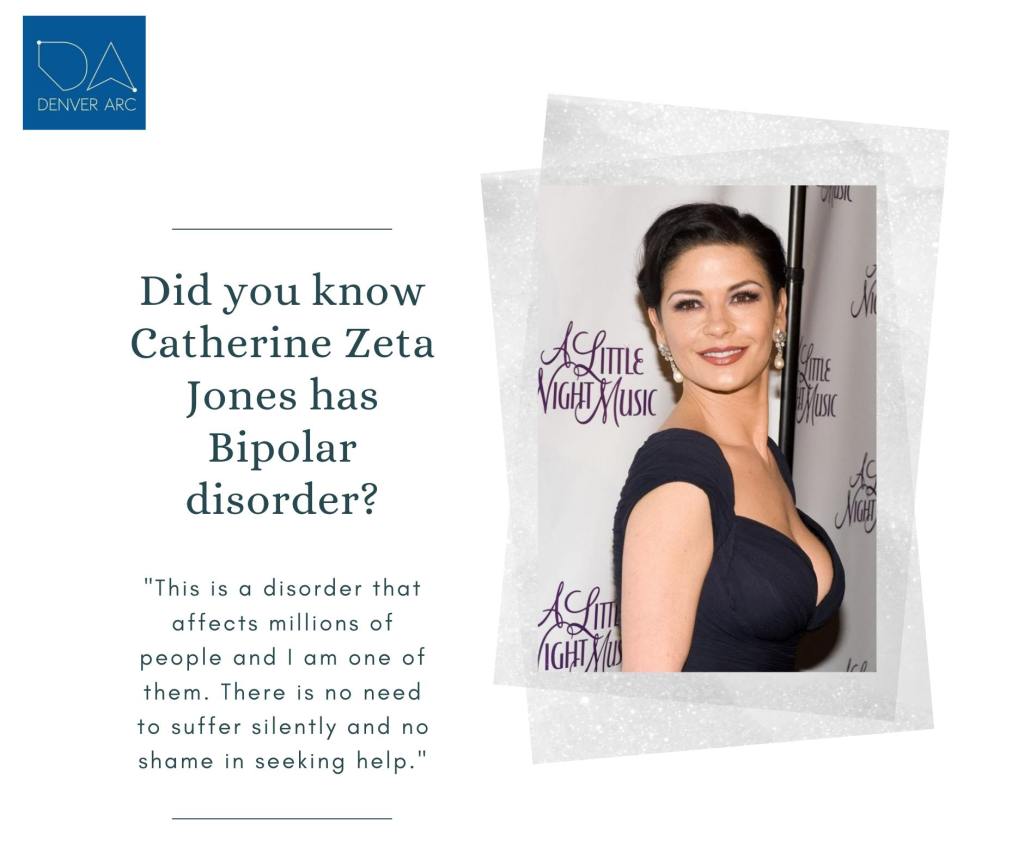
Plenty of people with Bipolar Disorder can have fulfilling lives. Many high-profile celebrities have been diagnosed with diagnosed with Bipolar Disorder such as Catherine Zeta Jones and Mariah Carey, and they have gone on to have huge successes. Accurate diagnosis and treatment can help a person with Bipolar live a normal life.

If you feel like you can relate to the symptoms posted in this blog, please feel safe and encouraged to seek the help of a professional.

If you’d like to anonymously search for mental health services local to you, in the privacy of your own home, check out the Solis mental health directory for a comprehensive list.

If you’d like further information about Bipolar Disorder, or you’d like to find a peer group in your local area, please visit the Bipolar UK website.

By Sarah Lord, Psychology Research Assistant

Mums and Mental Health

Being a mum and struggling with mental health is an isolating experience. There are so many demands on our time that taking care of our own needs, is often pushed to the very bottom of the ever full washing basket of every day dramas. Just finding the time to make a GP appointment is difficult enough and how do you discuss problems when the kids are constantly demanding your attention? As a mum and a grandma I know all too well how difficult taking time for yourself can be. We put our children first, that is why we carry on, often feeling drained, on edge or preparing for another sleepless night filled with concerns and doubts about ourselves. The real concern however is these emotions and worries are things that can contribute to developing a mental health problem. Depression, anxiety and low self-esteem for example are all triggered by other factors, be they biological, social, psychological and they don’t just go away.

Getting the right help at the right time is crucial to our own wellbeing and that of our children. That is why at Denver Arc we aim to bring the right help to you. Our online mental health assessment will provide you with an accurate diagnosis. Additionally, our signposting app, which we are constantly developing to cover the whole of the UK and beyond https://solis.directory will guide you to local services that specialise in treating your condition. Whether or not you access services is up to you, the choice is yours, but understanding your condition is a step in the right direction.

Can you help?

We would really like to hear your comments and learn about your experience of accessing mental health services. Not only mums, but anyone who has struggled with or had concerns about their mental health. We have also designed a short survey to gain a better understanding people’s experiences of accessing mental health services. If you have 5 minutes, that’s all it takes, you can access the survey via the link below. Responses are completely anonymous. https://forms.gle/rfrnpQwpo2a3Dn3M9

How this will help us?

Your input will greatly help speed up the process of clinical trials and help us to secure further funding. Ultimately our systems will provide faster, more convenient access to mental health assessments by cutting out the wait and provide more choice regarding treatment. We aim to make things easier.

Thank you from the Denver Arc team.

By Julie Manifold, Assistant Psychologist in Public Consultation.

Solis

Solis is Denver Arcs free mental health service finding website. You can find it at – https://solis.directory/

What we have done is assemble all the information about all the mental health services we can possibly find – public sector, NHS, charitable and paid private sector and make a frankly enormous database of them all.

Then we have made this searchable by condition type. If you were to ask for help with depression, Solis would then ask you what area you are in and then show you a list of everyone who can help in that area.

Solis is a fairly simple idea, which as always is much harder to execute than dream up.

How does Solis work?

Well in the background are a set of algorythms which take NICE treatment protocols as well as our own meta analysis of what actually works for each mental health issue and lists only those services which have a known ability to resolve the issue in question.

Simple, effective and without having to do any homework or extensive reading, which lets face it, people in need do not want to do.

By Julie Manifold, Assistant Psychologist in Public Consultation.

The Inspiration Behind Arcturus and Solis

By Joe Jackson, Managing Director and Founding Member

I started being interested in mental health around 2005/2006 shortly after I was crushed by a fork lift truck (pro tip, don’t do this*) which left me with mild but near permanent chronic pain. I was looking around for ways to combat this and happened across hypnotism actually at an NLP conference with Dr. Richard Bandler. I am sure everyone has seen the trick stage hypnotists do where they get people to eat onions but because they believe they are apples their eyes don’t water and so on. I asked around to see if that principle could apply to pain. Happily, it absolutely can. Even though my left side is technically (well, OK, actually) wrecked I can still get out and about pretty well and don’t even notice there is anything really wrong unless I overexert myself at which point I get a reminder to slow down. 

The work I did with that was largely inspired by Dr Milton Erickson, a psychiatrist from the US who had a phenonomal success rate with all types of patients (91% according to Professor Ernst Rossi). Along the way I picked up qualifications in Applied Psychology, Clinical Uses of Hypnotism, CBT, EMDR and have been a private sector therapist for at this point 12 years. 

The inspiration for Arcturus was because of the sheer volume of people who rang my office looking for a diagnosis and the inspiration for Solis was even more simply because a previous job required me to get face to face therapy for car accident victims and it was a massive pain in the arse. If it was difficult for me to find help, with all my knowledge, I figured it would be even harder for people with no knowledge whatsoever. So, we Diagnose, we Signpost.

Design a site like this with WordPress.com
Get started